Repositioning KFH Capital as an Institutional Leader
Repositioning KFH Capital as an Institutional Leader
Repositioning KFH Capital as an Institutional Leader
7 min est. read
Overview
Kuwait Finance House Capital's existing website didn't reflect the institution behind it. A brand with decades of history, regional awards, and billions in assets under management was living inside a generic financial template.
But the visual language was the surface problem. Underneath it, the site had no structure. Two very different audiences, individual investors and institutions, were being served the same undifferentiated content. There were no journeys, just pages. It read as a place to find information rather than an experience built around intent.
I led the work end to end, from research and information architecture through wireframing, visual direction, and a design system built in parallel, delivered in English and Arabic across desktop and mobile.
My Role
Lead Designer
Responsibilities
User Research
Information Architecture
Experience Design
Design System
Timeline
Q1 2026
Outcomes
Outcomes
Regional Benchmark
Positioned internally as the category standard
Positioned internally as the category standard
Board Presentation
Requested by the CEO pre-launch
Industry Submission
Committed by leadership for regional and international recognition
The Solution
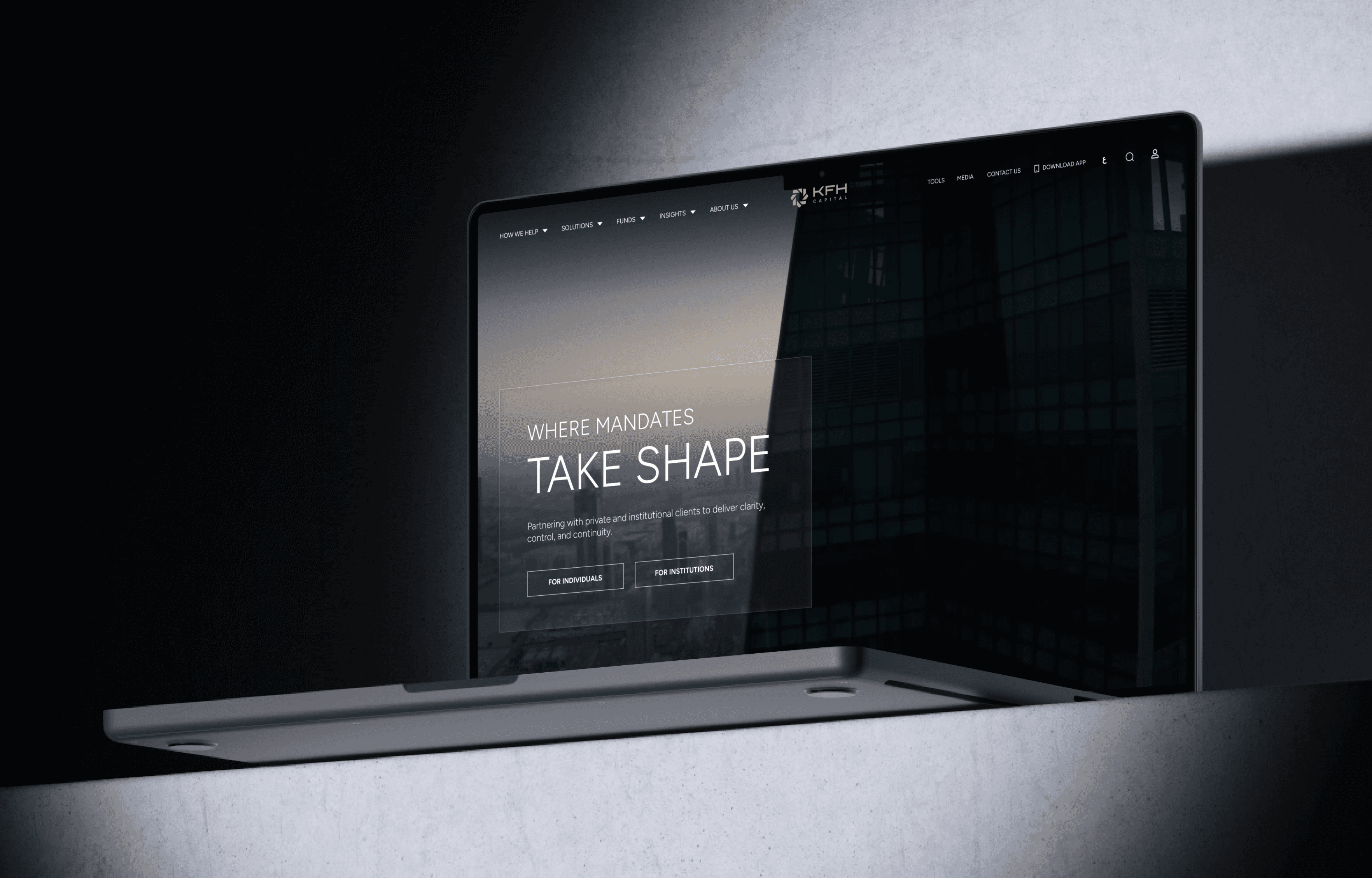
A look at the final design before we get into how it came together.
A look at the final design before we get into how it came together.
The Starting Point
Kuwait Finance House Capital is one of Kuwait's most established investment firms. Two decades of operation, Euromoney awards, billions in assets under management, clients spanning individuals and major institutions across the GCC.
Their website said none of this.
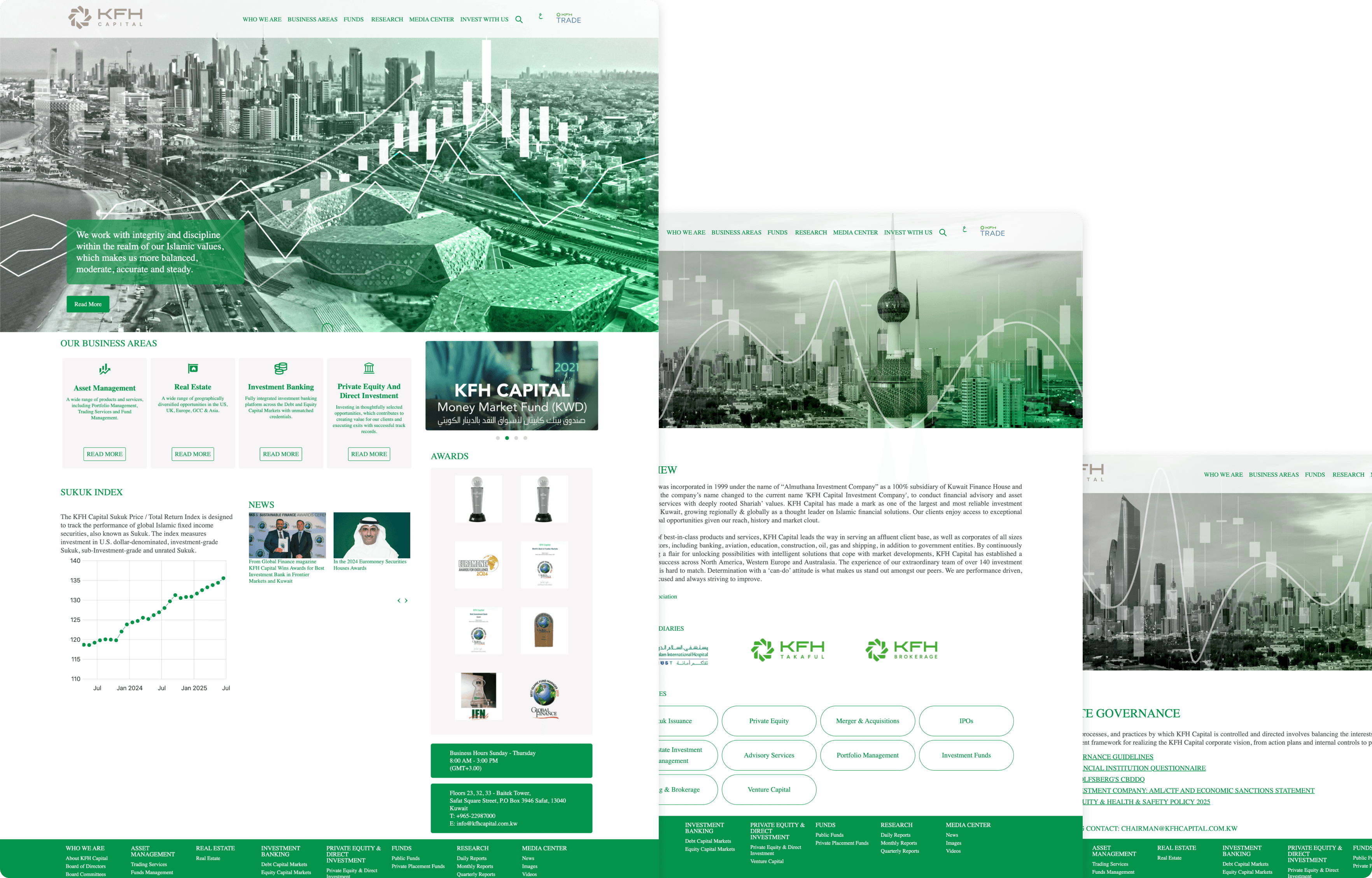
Generic stock photography, a flat green across every surface, inner pages that were text on white. The visual language was saying regional bank. The brand deserved to say institutional investment partner.
The structural problem ran deeper. An institution serving high net worth individuals and institutional investors was routing both through the same undifferentiated path. Neither group was being shown what they came for. The architecture wasn't built for how these audiences actually make decisions.
Kuwait Finance House Capital is one of Kuwait's most established investment firms. Two decades of operation, Euromoney awards, billions in assets under management, clients spanning individuals and major institutions across the GCC.
Their website said none of this.
Generic stock photography, a flat green across every surface, inner pages that were text on white. The visual language was saying regional bank. The brand deserved to say institutional investment partner.
The structural problem ran deeper. An institution serving high net worth individuals and institutional investors was routing both through the same undifferentiated path. Neither group was being shown what they came for. The architecture wasn't built for how these audiences actually make decisions.
Discovery
The project came to us because the team had seen the work on kfh.com and Kuwait Finance House Private, and wanted the same for Capital. That familiarity meant we could start with candour rather than a pitch.
I started with an audit of the existing site, assessed against a set of heuristics covering clarity and hierarchy, navigation and findability, trust and credibility, mobile responsiveness, and accessibility. That gave a documented picture of where the experience was actually failing rather than a general sense that it looked dated.
Then four interview sessions with the business units themselves: Real Estate Investment, Asset Management, Investment Banking, and Corporate Strategy and Marketing. Each one described a different version of the same problem. Real Estate wanted track record and deal credibility visible. Investment Banking flagged a credibility gap around transaction experience. Asset Management said the site should be organised by function rather than department. Marketing wanted it to work as a lead engine rather than a brochure.
The project came to us because the team had seen the work on kfh.com and Kuwait Finance House Private, and wanted the same for Capital. That familiarity meant we could start with candour rather than a pitch.
I started with an audit of the existing site, assessed against a set of heuristics covering clarity and hierarchy, navigation and findability, trust and credibility, mobile responsiveness, and accessibility. That gave a documented picture of where the experience was actually failing rather than a general sense that it looked dated.
Then four interview sessions with the business units themselves: Real Estate Investment, Asset Management, Investment Banking, and Corporate Strategy and Marketing. Each one described a different version of the same problem. Real Estate wanted track record and deal credibility visible. Investment Banking flagged a credibility gap around transaction experience. Asset Management said the site should be organised by function rather than department. Marketing wanted it to work as a lead engine rather than a brochure.

Alongside that I benchmarked eleven institutions, regional and global, including NBK Wealth, Al Rajhi Capital, Sedco Capital, Emirates NBD, Markaz, HSBC Amanah, Merrill, UBS, Morgan Stanley, and Goldman Sachs. Each was scored against seven principles: trust and credibility, digital UX and accessibility, mobile responsiveness, information architecture and service visibility, thought leadership, lead generation, and fund display. NBK Wealth, the benchmark the team had named at the start, scored 23 out of 35. The highest scorer reached 25. Nobody in the category had solved this well, which reframed the brief from catching up to setting the standard.
Alongside that I benchmarked eleven institutions, regional and global, including NBK Wealth, Al Rajhi Capital, Sedco Capital, Emirates NBD, Markaz, HSBC Amanah, Merrill, UBS, Morgan Stanley, and Goldman Sachs. Each was scored against seven principles: trust and credibility, digital UX and accessibility, mobile responsiveness, information architecture and service visibility, thought leadership, lead generation, and fund display. NBK Wealth, the benchmark the team had named at the start, scored 23 out of 35. The highest scorer reached 25. Nobody in the category had solved this well, which reframed the brief from catching up to setting the standard.

The team also gave me access to their investors, curating a list of individuals and institutional clients willing to take part in sessions. Talking to both groups separately is what made the split real rather than theoretical. They arrived with different questions, different prior knowledge, and different definitions of what a credible investment partner looks like.
The team also gave me access to their investors, curating a list of individuals and institutional clients willing to take part in sessions. Talking to both groups separately is what made the split real rather than theoretical. They arrived with different questions, different prior knowledge, and different definitions of what a credible investment partner looks like.
Information Architecture
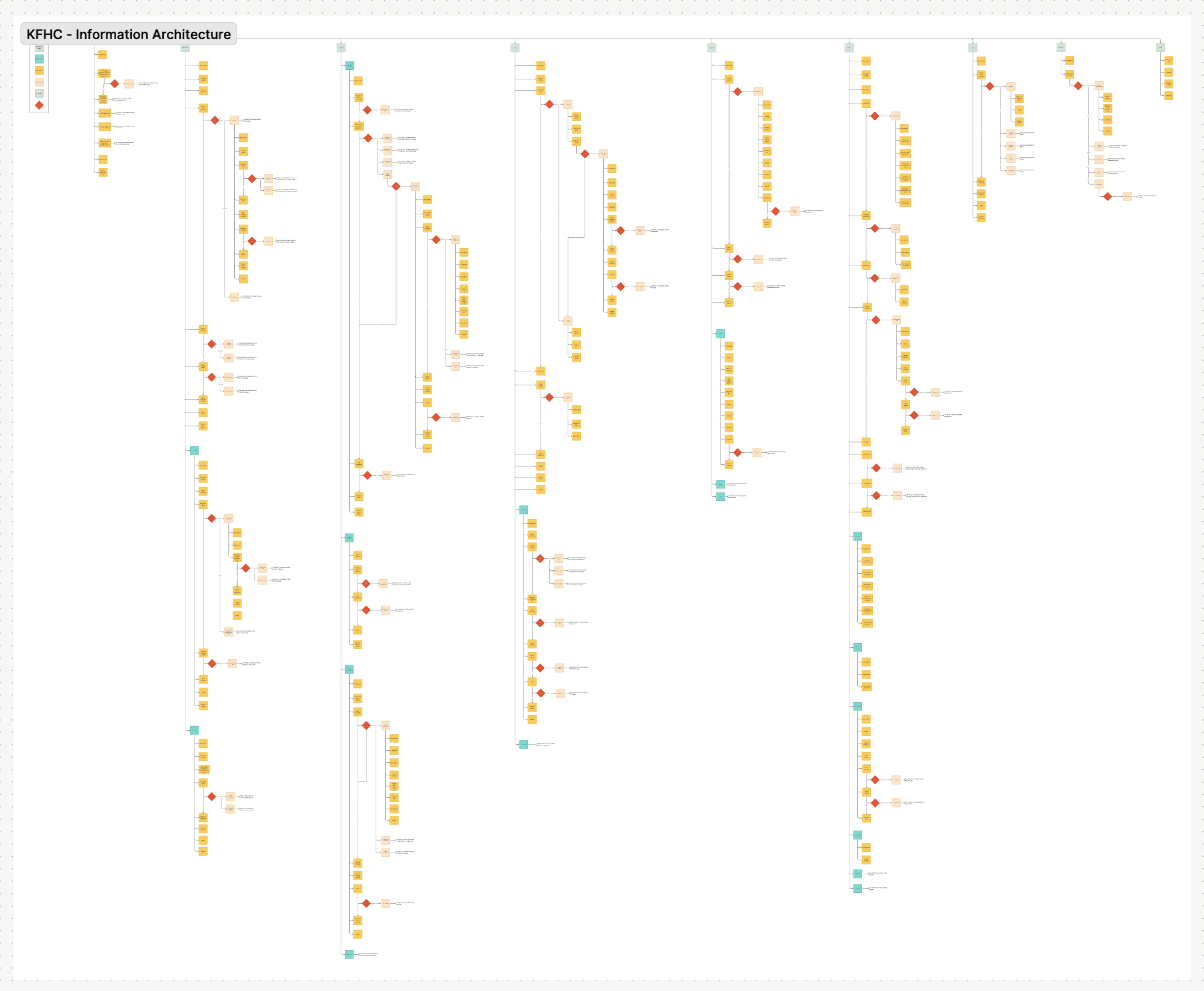
One finding sat underneath all the others. The site's structure mirrored KFH Capital's internal divisions rather than how investors actually think. Someone arriving to invest had to already understand the difference between Asset Management, Real Estate, and Investment Banking before they could find anything. The organisation chart had become the navigation.
So the architecture was rebuilt around intent instead of internal structure, with two distinct journeys for individuals and institutions, each surfacing what that group needed rather than making them dig for it.
This went through several rounds with the Kuwait Finance House Capital team. Structure is the hardest thing to change later, so it was worth getting alignment while it was still cheap to move.
One finding sat underneath all the others. The site's structure mirrored KFH Capital's internal divisions rather than how investors actually think. Someone arriving to invest had to already understand the difference between Asset Management, Real Estate, and Investment Banking before they could find anything. The organisation chart had become the navigation.
So the architecture was rebuilt around intent instead of internal structure, with two distinct journeys for individuals and institutions, each surfacing what that group needed rather than making them dig for it.
This went through several rounds with the Kuwait Finance House Capital team. Structure is the hardest thing to change later, so it was worth getting alignment while it was still cheap to move.
Wireframes
With the architecture locked, wireframing began. The site was large enough that treating it as one deliverable would have meant every page getting equal, shallow attention. Instead it was broken into batches, so each set of pages got proper scrutiny before the next started.
Same pattern as the IA, several rounds per batch until the team was aligned. Only once wireframes were signed off did any visual direction begin.
With the architecture locked, wireframing began. The site was large enough that treating it as one deliverable would have meant every page getting equal, shallow attention. Instead it was broken into batches, so each set of pages got proper scrutiny before the next started.
Same pattern as the IA, several rounds per batch until the team was aligned. Only once wireframes were signed off did any visual direction begin.

The Opportunity
With structure settled, the question became how it should feel.
Kuwait Finance House Capital was already leading the region. The digital experience didn't say so. NBK Wealth had set the regional standard, interactive, considered, unmistakably premium, and the team named them as the benchmark to surpass.
I approached the visual phase with a direction that hadn't been asked for, dark and cinematic, built around a 3D render of the Kuwait Finance House logo mark that stayed faithful to their approved 2D logo. It gave the brand depth and presence it had never had digitally. The team responded immediately.
The 3D element was produced using AI assisted tools, Meshy and ChatGPT image generation, rather than an external 3D resource. The quality was high enough that no external specialist was needed, which kept the process lean and the creative direction fully in house.
With structure settled, the question became how it should feel.
Kuwait Finance House Capital was already leading the region. The digital experience didn't say so. NBK Wealth had set the regional standard, interactive, considered, unmistakably premium, and the team named them as the benchmark to surpass.
I approached the visual phase with a direction that hadn't been asked for, dark and cinematic, built around a 3D render of the Kuwait Finance House logo mark that stayed faithful to their approved 2D logo. It gave the brand depth and presence it had never had digitally. The team responded immediately.
The 3D element was produced using AI assisted tools, Meshy and ChatGPT image generation, rather than an external 3D resource. The quality was high enough that no external specialist was needed, which kept the process lean and the creative direction fully in house.
Two Concepts
I developed two visually distinct directions rather than one. Presenting a single concept forces a yes or no with nothing to measure it against. Two gives people something to compare, and comparison consistently produces sharper feedback than judgment in isolation.
Concept 1 was atmospheric. A warm gold 3D render of the logo rotated slowly in the hero background, present but restrained. Liquid glass panels layered depth into the navigation. Cinematic, warm, premium.
I developed two visually distinct directions rather than one. Presenting a single concept forces a yes or no with nothing to measure it against. Two gives people something to compare, and comparison consistently produces sharper feedback than judgment in isolation.
Concept 1 was atmospheric. A warm gold 3D render of the logo rotated slowly in the hero background, present but restrained. Liquid glass panels layered depth into the navigation. Cinematic, warm, premium.
During the development of Concept 2, there was internal pressure to incorporate a green from the broader masterbrand. I advised against it. Kuwait Finance House Capital had its own distinct identity and introducing the masterbrand color would dilute the premium positioning the entire direction was built on. I could only push back so far in conversation, so I held the position in work instead. I prepared a version without the green proactively.
During the development of Concept 2, there was internal pressure to incorporate a green from the broader masterbrand. I advised against it. Kuwait Finance House Capital had its own distinct identity and introducing the masterbrand color would dilute the premium positioning the entire direction was built on. I could only push back so far in conversation, so I held the position in work instead. I prepared a version without the green proactively.
When the team saw the green version they rejected it immediately. The version I had already prepared was the one they responded to.
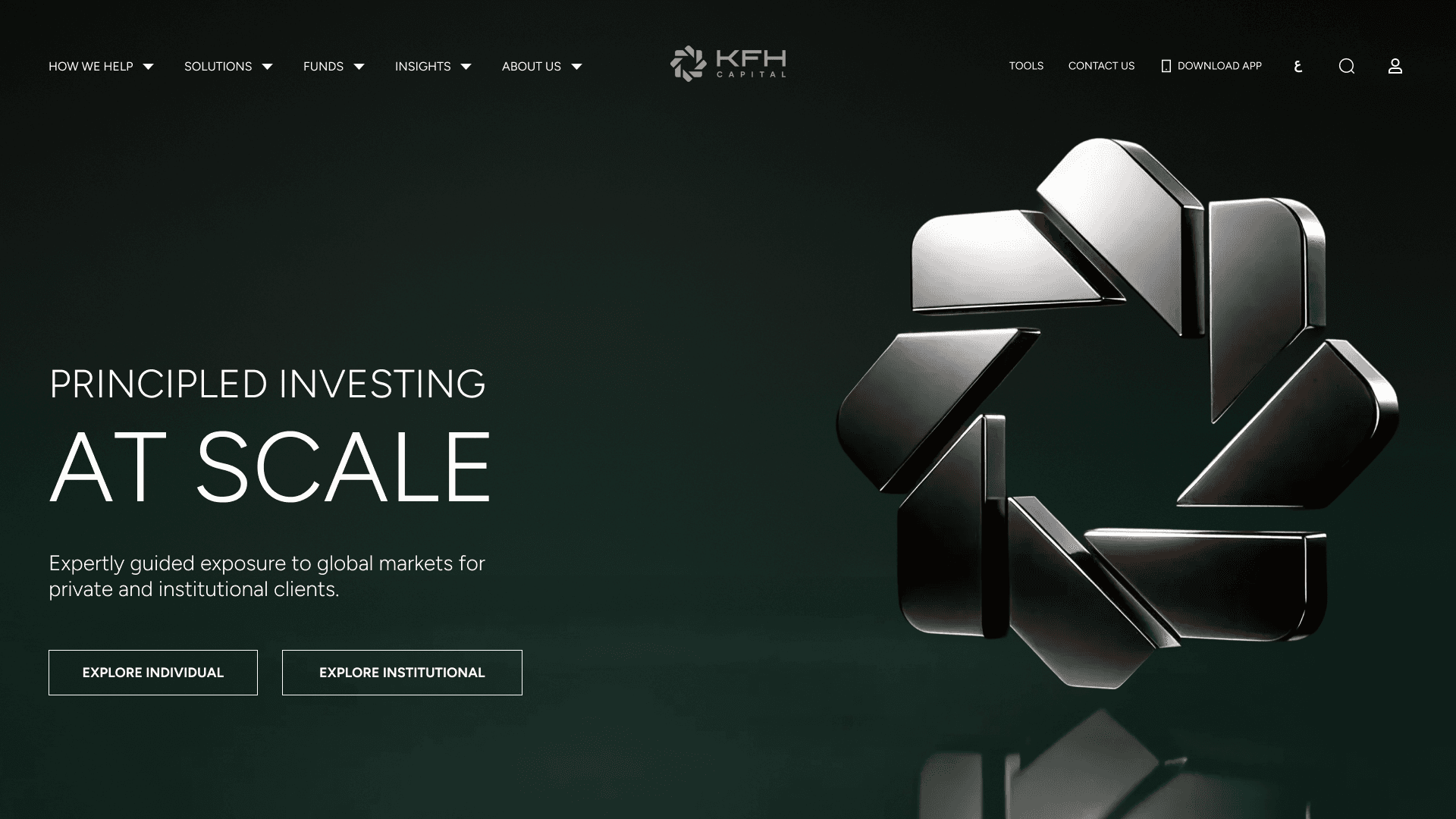
Concept 2 was authoritative. The same logo in platinum, more visible throughout the scroll. Pure black background. Constellation charts and area graphs. Where Concept 1 whispered premium, Concept 2 stated it.
When the team saw the green version they rejected it immediately. The version I had already prepared was the one they responded to.
Concept 2 was authoritative. The same logo in platinum, more visible throughout the scroll. Pure black background. Constellation charts and area graphs. Where Concept 1 whispered premium, Concept 2 stated it.
The Decision Neither Direction Could Make Alone
The response to both concepts was immediate. The CEO loved them equally and said it could go either way. The Group Account Director noted he had never seen that many people align on the same thing in his career.
Both concepts had captured something true about the brand. Concept 1 had the warmth of a wealth manager who had earned the right not to shout. Concept 2 had the authority of an institution operating across global markets. Kuwait Finance House Capital was both. Neither alone was the complete answer.
When the liquid glass navigation was revealed, the CEO connected it unprompted to Apple's design direction, noting it felt forward thinking and aligned with where the industry was heading.
After seeing both directions the team was confident they would surpass NBK Wealth. That was the benchmark they had set at the start.
The response to both concepts was immediate. The CEO loved them equally and said it could go either way. The Group Account Director noted he had never seen that many people align on the same thing in his career.
Both concepts had captured something true about the brand. Concept 1 had the warmth of a wealth manager who had earned the right not to shout. Concept 2 had the authority of an institution operating across global markets. Kuwait Finance House Capital was both. Neither alone was the complete answer.
When the liquid glass navigation was revealed, the CEO connected it unprompted to Apple's design direction, noting it felt forward thinking and aligned with where the industry was heading.
After seeing both directions the team was confident they would surpass NBK Wealth. That was the benchmark they had set at the start.
The Final Direction
From Concept 2: the dark background and the authority it conveyed.
From Concept 1: the gold logo placed in the background rather than competing for attention. But the interaction shifted. In Concept 1 the logo rotated continuously. In the final direction it rotates on scroll. It only moves when you do.
The black and white photography with selective gold highlights came from observation rather than a mood board. A team member had visited the Kuwait office and noticed this exact visual treatment on their walls. We took what the brand already believed about itself and built it into the digital experience. The team loved it immediately.
Liquid glass carried through unchanged. It was the element the CEO had connected to most strongly and it became the defining interaction language across the entire site.
From Concept 2: the dark background and the authority it conveyed.
From Concept 1: the gold logo placed in the background rather than competing for attention. But the interaction shifted. In Concept 1 the logo rotated continuously. In the final direction it rotates on scroll. It only moves when you do.
The black and white photography with selective gold highlights came from observation rather than a mood board. A team member had visited the Kuwait office and noticed this exact visual treatment on their walls. We took what the brand already believed about itself and built it into the digital experience. The team loved it immediately.
Liquid glass carried through unchanged. It was the element the CEO had connected to most strongly and it became the defining interaction language across the entire site.
The Inner Pages
Before seeing any inner pages, the team raised a specific concern: most designers get the homepage right and lose the thread on inner pages.
When the inner page direction was presented, they loved it on first sight.
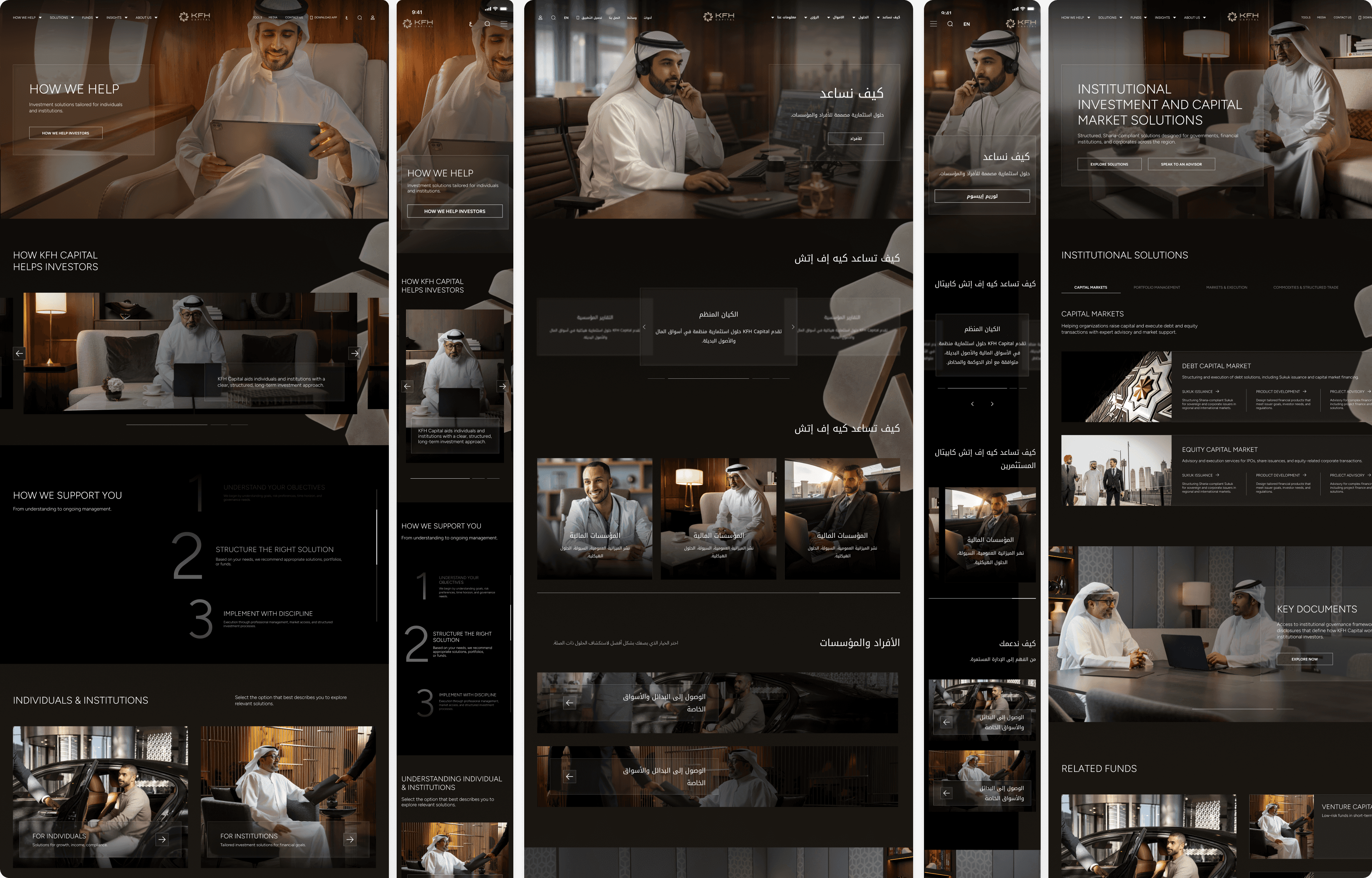
The design language carried through completely, dark background, warm photography, consistent typographic hierarchy. A conscious decision was made to keep inner page interactions lighter than the homepage to protect performance. Content heavy pages needed to be fast and reliable. The bilingual delivery extended through every inner page at equal quality, English and Arabic fully mirrored with RTL layouts built to the same standard.
Before seeing any inner pages, the team raised a specific concern: most designers get the homepage right and lose the thread on inner pages.
When the inner page direction was presented, they loved it on first sight.
The design language carried through completely, dark background, warm photography, consistent typographic hierarchy. A conscious decision was made to keep inner page interactions lighter than the homepage to protect performance. Content heavy pages needed to be fast and reliable. The bilingual delivery extended through every inner page at equal quality, English and Arabic fully mirrored with RTL layouts built to the same standard.
The System Behind The Scale
33 pages. English and Arabic. Desktop and mobile. 66 total deliverables.
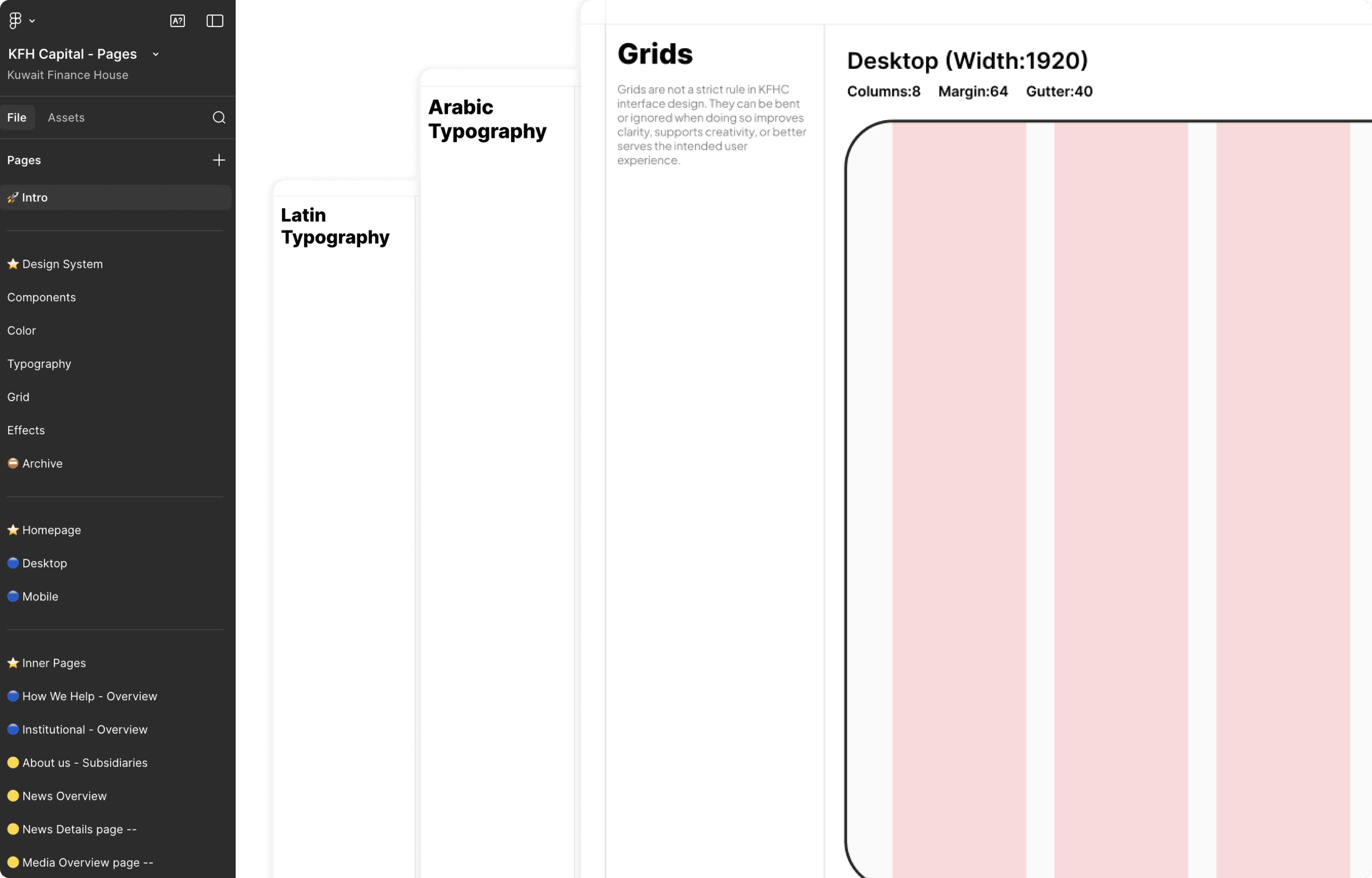
The design system was built in parallel with the work. Typography and tokens were defined early, Figtree for Latin, Noto Kufi Arabic for Arabic, both fully documented. Liquid glass codified as a named effect. Tokens defined across color, spacing, and type.
The token structure proved its value under pressure. When the team wanted to see a variation during a review call, it was mocked up before the call ended. Without the system that would have required a follow up. The delivery speed across 66 deliverables was directly enabled by it. The same scope without the system would have required significantly more time and resource.
The developers, seeing the Figma file for the first time, asked how the level of interactivity in the concepts and final direction was even possible.
33 pages. English and Arabic. Desktop and mobile. 66 total deliverables.
The design system was built in parallel with the work. Typography and tokens were defined early, Figtree for Latin, Noto Kufi Arabic for Arabic, both fully documented. Liquid glass codified as a named effect. Tokens defined across color, spacing, and type.
The token structure proved its value under pressure. When the team wanted to see a variation during a review call, it was mocked up before the call ended. Without the system that would have required a follow up. The delivery speed across 66 deliverables was directly enabled by it. The same scope without the system would have required significantly more time and resource.
The developers, seeing the Figma file for the first time, asked how the level of interactivity in the concepts and final direction was even possible.
Validation
Testing ran with both internal team members and the same curated group of individual and institutional users who had taken part in research, so the people validating the work were the people it had been built around.
Sessions were run in batches, matching how the design had been produced. Each participant was given a journey to complete and a goal to reach, then observed rather than asked. Watching where someone hesitates tells you more than asking them afterwards whether it felt clear.
Insights from each batch fed back into that batch's designs, and forward into the ones still being built. By the later stages the same class of friction wasn't resurfacing, because it had already been designed out upstream.
Testing ran with both internal team members and the same curated group of individual and institutional users who had taken part in research, so the people validating the work were the people it had been built around.
Sessions were run in batches, matching how the design had been produced. Each participant was given a journey to complete and a goal to reach, then observed rather than asked. Watching where someone hesitates tells you more than asking them afterwards whether it felt clear.
Insights from each batch fed back into that batch's designs, and forward into the ones still being built. By the later stages the same class of friction wasn't resurfacing, because it had already been designed out upstream.
Outcomes
Before launch, the CEO requested a board presentation, positioning the work as a reference point for what was possible across other divisions, expanding its scope beyond the original brief.
Leadership has also committed to submitting the work for regional and international industry recognition, and the platform has been positioned internally as the benchmark for the region's wealth management category, a signal of institutional confidence in the outcome, not just a design quality metric.
Tradeoffs
The homepage was built to be motion forward but I made the decision to dial interactions back significantly on inner pages. Fast and reliable on content heavy pages matters more than visual spectacle. Concept 1 had the logo rotating continuously which felt atmospheric but distracting. Concept 2's scroll responsive approach was the right call, the brand moves when you engage with it rather than performing in the background regardless of what the user is doing. Building the design system in parallel rather than after created short term friction but meant consistency across 66 deliverables was structural, and when a live variation was needed on a call it took minutes rather than a follow up because the tokens were already defined in Figma.
The homepage was built to be motion forward but I made the decision to dial interactions back significantly on inner pages. Fast and reliable on content heavy pages matters more than visual spectacle. Concept 1 had the logo rotating continuously which felt atmospheric but distracting. Concept 2's scroll responsive approach was the right call, the brand moves when you engage with it rather than performing in the background regardless of what the user is doing. Building the design system in parallel rather than after created short term friction but meant consistency across 66 deliverables was structural, and when a live variation was needed on a call it took minutes rather than a follow up because the tokens were already defined in Figma.
Learnings
The structural problem was the real problem. The site looked outdated, so that's what everyone saw first. But two audiences sharing one undifferentiated path was costing more than the visual language was. Fixing the architecture first meant the visual work had something to sit on.
Two strong concepts don't create indecision, they create clarity. Presenting two genuinely distinct directions could have confused the team. Instead it produced a synthesis neither direction could have reached alone.
When there was internal pressure to include a color that didn't belong to Kuwait Finance House Capital's identity, I prepared an alternative proactively rather than debating it. When the team rejected the direction I had advised against, the right version was already ready. Preparing is sometimes better than arguing.
A design system built in parallel pays off in moments you can't plan for. Defining tokens and typography early meant that when the team asked to see a variation live on a call, it was possible before the call ended.
Testing in the same batches the work was built in meant insights compounded. Each round of feedback improved the pages in front of us and the pages that hadn't been designed yet.
The structural problem was the real problem. The site looked outdated, so that's what everyone saw first. But two audiences sharing one undifferentiated path was costing more than the visual language was. Fixing the architecture first meant the visual work had something to sit on.
Two strong concepts don't create indecision, they create clarity. Presenting two genuinely distinct directions could have confused the team. Instead it produced a synthesis neither direction could have reached alone.
When there was internal pressure to include a color that didn't belong to Kuwait Finance House Capital's identity, I prepared an alternative proactively rather than debating it. When the team rejected the direction I had advised against, the right version was already ready. Preparing is sometimes better than arguing.
A design system built in parallel pays off in moments you can't plan for. Defining tokens and typography early meant that when the team asked to see a variation live on a call, it was possible before the call ended.
Testing in the same batches the work was built in meant insights compounded. Each round of feedback improved the pages in front of us and the pages that hadn't been designed yet.